Delays in Maida Vale rubbish pickup and how to avoid them
Posted on 18/06/2026
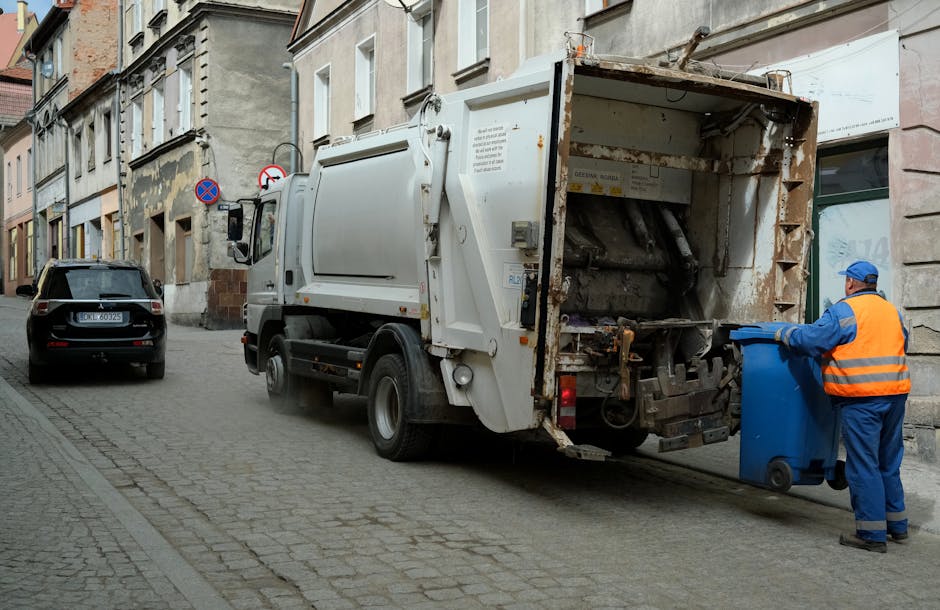
Delays in Maida Vale rubbish pickup and how to avoid them: what causes them and how to stop them happening
If you have ever lined bags up neatly outside, checked the clock twice, and still wondered why your rubbish collection has not arrived, you are not alone. Delays in Maida Vale rubbish pickup and how to avoid them is a very real local issue, especially in streets where parking is tight, access is awkward, and the day can disappear fast if the booking is not planned properly. The good news? Most delays are preventable. In this guide, we will look at the common causes, what a smooth collection should look like, and the practical steps that make pickup day easier from start to finish.
There is a lot more to this than simply "be ready on time". A clean booking, the right item list, clear access, and good communication can save you money, stress, and that awkward feeling of standing by the window at lunchtime wondering where the team has got to. Let's make it simple.
Why Delays in Maida Vale rubbish pickup and how to avoid them Matters
In a place like Maida Vale, timing is not just a convenience. It affects shared entrances, residents, neighbours, rental handovers, office moves, builders' schedules, and even whether you can park for long enough to load bulky items without causing a fuss. A delayed rubbish pickup can mean bags left in communal areas, missed move-out deadlines, extra storage costs, or the sort of clutter that starts to feel personal after day two.
For homeowners, delays can interrupt a clear-out that was meant to be finished before guests arrived or before work started. For landlords and letting agents, a late collection can create an avoidable scramble between tenancies. For businesses, it can mean wasted staff time and a reception area that looks messy when clients walk in. Not ideal, to be fair.
It also matters because waste jobs are often chained to other parts of a schedule. A collection might need to happen after keys are handed over, after a builder has finished, or before furniture is delivered. If one step slips, the whole day slips. That is why avoiding delay is really about planning, not luck.
Maida Vale has its own practical quirks too. Tree-lined residential streets are lovely, but they can also make parking unpredictable. Basement flats, mansion blocks, shared courtyards, and narrow entrances all add friction. One small issue can turn a twenty-minute job into a slow, awkward one. And when jobs run late, everyone feels it.
Expert summary: Most rubbish pickup delays are not random. They usually come from unclear booking details, access problems, poor timing, or items that were not described accurately in the first place. Fix those early and you remove most of the risk.
How Delays in Maida Vale rubbish pickup and how to avoid them Works
At a basic level, rubbish pickup works best when the crew knows exactly what they are collecting, where they can park, how they can reach the waste, and whether anything unusual may slow the job down. If any of those details are missing, the collection can still happen, but it may be delayed, rescheduled, or take longer than expected.
Here is the usual flow. First, the booking is made. Then the job is assigned a time window or arrival slot. After that, the team travels to the property, checks access, reviews the load, and completes the collection if the conditions match what was agreed. That sounds straightforward. In practice, the weak points are almost always the same.
The most common delay triggers are:
- the item list was incomplete or too vague
- access was tighter than expected
- parking was unavailable when the crew arrived
- the rubbish was not placed where it was supposed to be
- the volume was larger than described
- someone was not available to let the team in
- there were extra items or heavier waste not discussed beforehand
If you have ever booked something in a hurry and thought, "It'll be fine, they'll manage," well, sometimes they do. But rubbish collection is one of those jobs where a few extra minutes of clarity can save a lot of back-and-forth later.
Maida Vale also has more than one type of collection scenario. A simple bag-and-box pickup is different from a bulky furniture job, and both are different again from a full flat clearance. Larger jobs usually need more planning, more manpower, and more careful access checks. That is why detailed booking information matters so much. It helps you avoid the classic half-day of uncertainty.
Key Benefits and Practical Advantages
Getting the timing right is not just about convenience. It changes the whole experience. A well-planned rubbish pickup feels calm, predictable, and almost boring. And boring is good here. Boring means no surprises, no chasing, and no apologising to neighbours because a sofa has been sitting in the hallway all morning.
The main benefits of avoiding delays include:
- Less disruption to household routines and building access
- Lower stress on move days, refurbishment days, or end-of-tenancy deadlines
- Better value because the job is less likely to drag on
- Cleaner communal areas with less clutter sitting around
- More reliable scheduling for landlords, tenants, and businesses
- Fewer misunderstandings about what was agreed and what happens next
There is also a subtle but important benefit: a better working relationship with the collection team. When everything is clearly arranged, you are more likely to get a straightforward, efficient service. Nobody enjoys a messy handover. Not the customer, not the crew, and certainly not the neighbour who keeps glancing out of the window.
If your waste is part of a bigger project, avoiding delays can keep everything else moving. That matters for house clearance in Maida Vale, office moves, furniture removal, and builders' waste disposal, where even a small timing issue can snowball into a much larger headache.
Who This Is For and When It Makes Sense
This guide is useful for anyone who wants a reliable pickup without the last-minute hassle, but it is especially relevant if your collection has a deadline attached to it. That could be a move-out date, a refurbishment, a tenancy change, or a clear-out before new furniture arrives.
It makes sense if you are:
- a homeowner dealing with clutter, bulky items, or garden waste
- a tenant leaving a flat and trying to hand back keys cleanly
- a landlord or letting agent arranging a post-tenancy clear-out
- a small business clearing office furniture or archive waste
- a contractor managing debris from a renovation or repair
- someone booking a one-off collection for mixed household waste
It is also useful for people who already know Maida Vale can be a bit tricky logistically. Basement storage, narrow streets, resident parking, and shared entrances all change the timing picture. If your collection is near a busy time of day, or if access depends on a concierge or building manager, you will want to be organised from the start.
And if you are new to the area, a little local knowledge goes a long way. Reading about the neighbourhood through pieces like residents' views on life in Maida Vale or the broader local context in this Maida Vale suburb guide can help you understand why access and timing matter so much here.
Step-by-Step Guidance
If you want fewer delays, use a process rather than a guess. Here is the most reliable way to approach it.
- List every item clearly. Don't say "a few bits" if there is a wardrobe, a mattress, three box fans, and a very awkward desk. Be specific. Photos help.
- Check access before booking. Look at gates, stairs, lift availability, hallway width, parking restrictions, and whether a key holder needs to be present.
- Choose the right service type. A small general collection is not the same as a full clearance. If you are clearing an office or a lot of furniture, say so upfront.
- Agree the collection point. Make sure everyone knows where the waste will be: outside the building, in a front garden, in a basement, or at a loading bay.
- Confirm the timing window. Ask how the arrival time will be communicated and what happens if traffic or access conditions change.
- Prepare the waste in advance. Put items together, separate anything fragile, and make sure the load is ready when the team arrives.
- Keep someone available. If someone needs to open a gate, show the load, or answer a quick question, they should be reachable.
- Review the final quote or booking notes. Check that the description matches what is actually on site.
A simple example: if you are arranging furniture disposal in Maida Vale, a clear photo of a sofa, bed frame, and dining table often prevents a delay that would have happened because the crew expected lighter items. That one step saves time on both sides. Easy win.
If you are dealing with garden cuttings, the same principle applies. For garden waste removal in Maida Vale, it helps to mention whether the waste is bagged, loose, damp, thorny, or mixed with soil. Those details sound small, but they influence how quickly the job can be handled.
Expert Tips for Better Results
Over time, the jobs that run smoothly usually have a few things in common. None of them are glamorous. That's the point. Good rubbish pickup is mostly about removing friction before the van turns up.
- Book earlier than you think you need to. A same-day scramble can work sometimes, but it leaves less room for surprises.
- Be honest about volume. Understating the amount of waste is one of the fastest ways to create delay.
- Take a quick access walk-through. If you can, stand at the entrance and imagine carrying a mattress through it. If it feels tight, it probably is.
- Keep parking in mind. In Maida Vale, parking can change from easy to impossible depending on the time and the street.
- Place items close together. A tidy staging area reduces lifting time and reduces the chance of forgotten bags.
- Separate special items. If there are fragile, sharp, or heavy pieces, flag them early.
- Plan around building rules. Shared blocks often have loading restrictions or quieter hours. Best not to discover that at the front door.
One small but useful habit: send a photo even when you think the booking details are obvious. A picture is worth a lot more than a rushed message like "it's just some stuff in the flat". We have all said it. It is rarely enough.
If your collection is linked to a larger project, you may also want to look at the practical guidance in common booking problems for Maida Vale rubbish collection and the very real-world notes in what to know about access issues for Maida Vale rubbish jobs. Those two topics come up more often than people expect.

Common Mistakes to Avoid
Most delays can be traced back to a small set of mistakes. Some are obvious. Others only become obvious after the van is already en route. A bit annoying, that.
- Giving vague descriptions. "Household rubbish" does not tell anyone much.
- Forgetting stairs, lifts, or long carries. Access affects the time needed.
- Assuming parking will be available. In a busy street, that is a risky assumption.
- Leaving items inside without saying so. Collections are often quicker when waste is already staged appropriately.
- Changing the job at the last minute. Adding large items on the day can create a delay or a re-quote.
- Not checking building rules. This is especially relevant in managed blocks.
- Missing the contact person. If the team cannot get in touch, the job can stall fast.
Another common error is trying to bundle too many different types of waste into one vague booking. A sofa, a pile of office paper, old shelving, and garden cuttings may all be "rubbish", but they do not always need the same preparation. If you are dealing with mixed waste, say so clearly. It is much better to over-explain than under-explain.
And if you are trying to avoid hidden extras as well as delays, it is worth reading how to avoid hidden charges in Maida Vale rubbish removal. Timing and pricing often go hand in hand, whether we like it or not.
Tools, Resources and Recommendations
You do not need fancy software to avoid delays. A few simple tools and habits are enough. Honestly, a notes app and a camera will handle most of it.
- Phone photos or video of the waste, access route, and parking situation
- A written item list so nothing gets missed during the booking
- Building access notes for codes, concierge details, or lift restrictions
- A contact name and number for the person who can meet the team if needed
- Calendar reminders for the collection window and any preparation tasks
It also helps to understand the wider service options before you book. If you are comparing a general pickup with a bigger clearance, a quick look at the available service overview and pricing and quotes information can help you set realistic expectations. That is not about shopping around endlessly. It is about matching the job to the right type of service first time.
For some readers, sustainability matters too. If you want a collection approach that feels more thoughtful and less wasteful, the site's recycling and sustainability guidance is a sensible place to understand the broader approach. No one wants useful materials to be handled badly just because the job was rushed.
Law, Compliance, Standards, or Best Practice
This is one of those areas where a little caution goes a long way. Waste handling in the UK is regulated, and responsible collection work should follow proper duty-of-care principles, safe handling practices, and lawful disposal routes. You do not need to memorise the legal detail to make a good booking, but you should expect the provider to act professionally and responsibly.
In plain English, that means the collection should be set up in a way that avoids unsafe lifting, improper dumping, and confusion about what is being removed. It also means you should be honest about the type of waste. Certain items may need separate handling, and some materials are not treated the same way as ordinary household rubbish. If a provider asks detailed questions, that is usually a good sign, not an inconvenience.
Best practice also includes clear pricing, agreed access arrangements, and sensible communication. In a local setting like Maida Vale, that is especially important because tight streets and shared entrances make sloppy planning more visible. A tidy job is not just nicer. It is safer and usually quicker too.
If trust and process matter to you, it can help to read more about the company's approach to safety in insurance and safety and the general background on about us. Those pages give useful reassurance about how a professional service thinks about responsibility, not just speed.
Options, Methods, or Comparison Table
Not every rubbish problem needs the same solution. Sometimes a quick pickup is enough. Sometimes you need a bigger clearance with more planning. Here is a practical comparison to help you choose.
| Option | Best for | How it helps avoid delays | Possible downside |
|---|---|---|---|
| Basic rubbish pickup | Small volumes, bagged waste, simple clear-outs | Fastest when access is easy and items are clearly listed | Less suitable for bulky or mixed waste |
| Furniture removal | Sofas, beds, wardrobes, tables | Works well when item sizes and access points are confirmed early | Heavy items can slow the job if stairs or parking are awkward |
| House clearance | Full rooms, move-outs, probate, or end-of-tenancy work | Careful planning reduces confusion and missed items | Needs more time and a more detailed brief |
| Office clearance | Desks, chairs, archive waste, mixed office furniture | Scheduling around building access keeps disruption down | May involve lift use, security checks, or limited loading times |
| Builders' waste disposal | Renovation debris, packaging, site waste | Prevents hold-ups by separating debris and confirming volume | Can be delayed if the site is not ready or debris is still being generated |
The simple rule is this: the more bulky, mixed, or access-heavy the job, the more benefit you get from early planning. For something like a small flat clear-out, the main issue is usually organisation. For a larger property or commercial site, the big risk is usually timing plus access. Both matter, just in different ways.
Case Study or Real-World Example
Here is a realistic example from the sort of job that happens all the time in Maida Vale. A resident in a mansion block needed a sofa, two armchairs, and a pile of mixed household waste removed before a tenancy handover the following morning. They were organised in one sense: they knew the deadline. But they had not checked whether the sofa could make it through the communal hallway without blocking access for neighbours.
On the first pass, that created a delay. The collection team had to pause, reassess the route, and confirm a better exit point. Nothing dramatic, but it cost time. The fix was simple: the resident sent a photo of the hallway, the team updated the plan, and the furniture was moved via a different route later that day. The job was completed, but only after the sort of inconvenience that could have been avoided with one more step at the start.
That is the lesson, really. Most delays are not caused by one big problem. They are caused by a series of small assumptions. "There'll be parking." "The lift works." "The items fit." "Someone will be home." Usually, one of those turns out to be wrong.
Another example comes from office work. A small firm in Maida Vale arranged a collection after a desk refresh. The waste was ready, but the loading bay had restricted hours, and no one had checked the building manager's rules. The collection still happened, but later than planned. Once the team knew the loading window next time, the whole process ran far more smoothly. Simple as that.
Practical Checklist
Use this checklist before pickup day. It is short for a reason.
- Have I listed every item clearly?
- Have I included photos if the waste is bulky or mixed?
- Have I checked access, stairs, lifts, and entrance width?
- Have I thought about parking or loading space?
- Does someone need to be present to grant access?
- Have I confirmed the collection point?
- Have I told the provider about heavy, sharp, or awkward items?
- Have I checked any building or management rules?
- Is the waste ready and grouped together?
- Do I have a contact number available on the day?
If you can tick all of those off, you are in a very good place. Not perfect, perhaps. But very good. And in rubbish collection, "very good" usually means "no drama".
Conclusion
Delays in Maida Vale rubbish pickup and how to avoid them comes down to one simple idea: the smoother the information, the smoother the collection. When you describe the waste properly, check access early, and prepare the site before the team arrives, you remove the main causes of delay before they happen.
That matters whether you are clearing a flat, booking furniture removal, tidying a garden, or managing a bigger project. It saves time, reduces stress, and keeps the day feeling under control instead of a bit chaotic. Let's face it, nobody wants a rubbish job to become the main event.
If you are planning a collection in Maida Vale and want a cleaner, quicker process, take the time to prepare properly and choose the right service for the job. A few minutes of planning now can spare you a very annoying delay later.
Get a free quote today and see how much you can save.

 Tipper Van - Rubbish Clearance and Waste Collection Prices in Maida Vale, W9
 Luton Van - Rubbish Clearance and Waste Collection Prices in Maida Vale, W9


